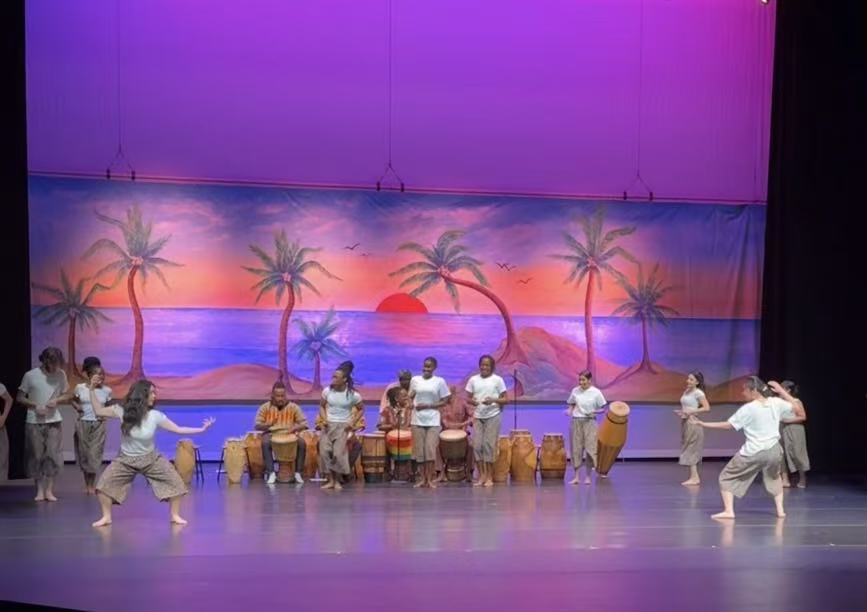
“In this class, we’re not working toward perfection. Everyone’s body has its own way of doing the movements, and we’re all beautiful when we’re embodying the joy of our ancestors,” Prof. Iddrisu Saaka said to us. Hearing this shook me to the deepest gut of mine.
Taking West African dance was the first time I learned that dance can be something experienced as a community, rather than something placed on a pedestal and only to be admired from a distance. It showed me that in that culture, dance is for everyone, regardless of body type.
In my country, dance is rarely taught or understood as something that can be performed by someone who weighs more than 50 kilograms or who has not received formal training. It is not for everyone. And I’m never considered one of those “qualified” to dance. Dance belongs on a stage: the audience’s role is to admire, and the dancers’ role is to perform. This class was my first exposure to a form of dance that is deeply historical, cultural, and communally grounded.
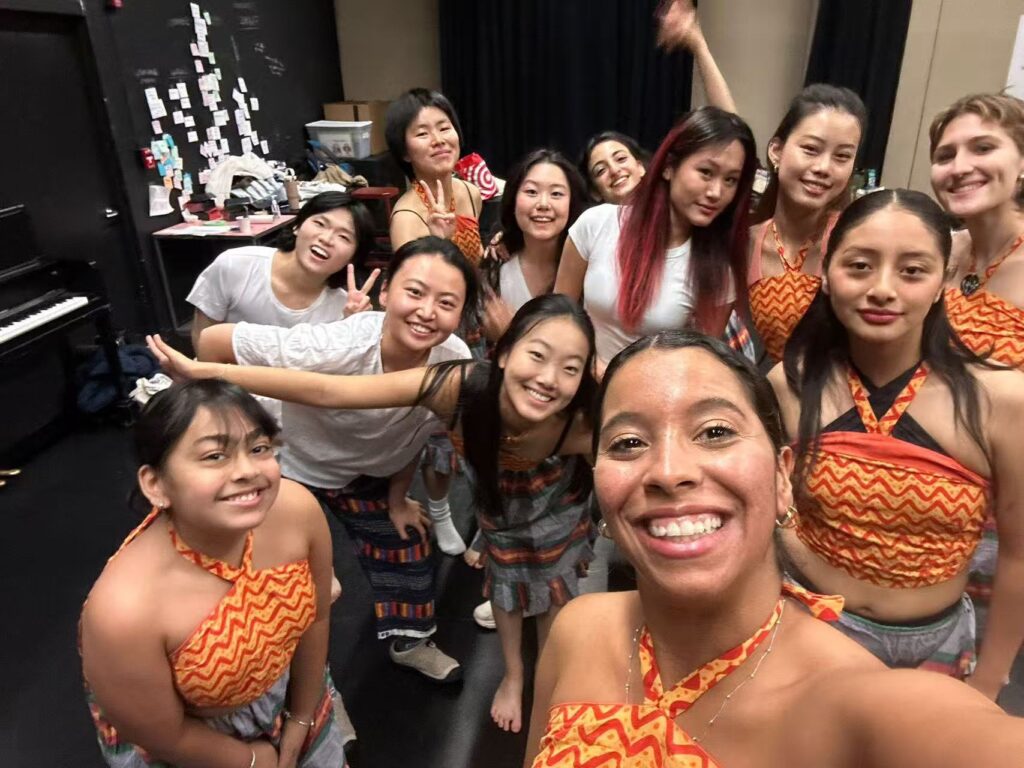
At the beginning, I was very nervous about not copying the movements perfectly or not catching the rhythm exactly and especially doing dance without a mirror. But very quickly, this choice revealed something important about myself. When I dance in front of a mirror, I judge myself constantly—my posture, my lines, whether I am “doing it right”—and that constant self-evaluation pulls me away from feeling the spirit and embodiment of dance.
Learning without a mirror forced me to pay attention to the communal spirit and context behind each movement in the live music, in moving alongside my peers, in the movements, and in being present in my own body. It also made me realize that most communal dances weren’t created with the mirror or with the purpose of being staged… It’s a nature conversation between the people, the music, the land, the history, the body, the mind, and everything around.
Leave a Reply