
I have always considered myself a linguistic refugee. I don’t know whether this is an established term or something I invented for myself, but I grew up moving between worlds through language—escaping, surviving, and imagining in between.
English has been my favorite subject since primary school, which was never something my teachers or family were happy to see. Math, physics, and chemistry were the subjects I “should” be loving. “Should” is a verb that runs in the blood of the language of Mandarin. It is rarely about what I “can” do, but always about what I “should” do. I should not read books outside my textbooks. I should not move an inch during the mandatory lunch nap. I should prioritize math and physics. I should be skinny. I should get perfect scores.

This is exactly why I loved learning English. The stories told in that language were about what I “can” do, what I can create. During mandatory evening study sessions in junior high, while others were cramming for exams, finishing homework, and doing what they “should” do, I was writing my diary in English.
Eventually, I arrived at a place where I thought I could finally be myself. I attended an international high school in Shanghai, taking classes in English and speaking with teachers in English every day. At first, it felt wonderful. Everyone sounded positive, encouraging, and empowered. But gradually, small cracks began to appear in my identity. I felt caught between the verb should, which had shaped me since childhood, and the empowerment embedded in English, which felt almost too good to be true to a younger version of myself.
This tension became especially clear when I returned to Wuhan and visited my junior high teachers. They reacted strangely to the way I spoke—thanking people frequently, making small talk, using an overtly positive tone. One of my junior high math teachers once told me, “Don’t say thank you when you don’t mean it. Don’t embody this Western way of fake niceness. This is not America.”
As I spent more time immersed in English, I began to sense the language’s core logic more clearly. English is indeed positive and empowering, but it can also feel self-exploitative. I constantly tell myself, You can do this. You are enough. You are amazing. Unlike Mandarin, which often imposes discipline and pressure from the outside, English internalizes it. The demand to improve does not disappear—it turns inward…… I began to discipline and exploit myself, pushing myself endlessly to become better, more fulfilled, more authentic. The language constructs an illusion of freedom and coherence, a sense of autonomy that feels liberating on the surface, yet quietly conceals another form of power beneath it.
While I was struggling through high school, caught in confusion about my identity between English and Mandarin, my third language arrived. Spanish—a language that still feels resistant, communal, energetic, and largely free of anxiety to me.
In my final year of high school, I took Spanish with my physics teacher, who is from Spain. I was terrible at physics, and he knew it. Whenever I panicked, he would simply say, “Bah, una tontería.” To him, nothing ever seemed more important than his siesta or enjoying Shanghai’s weather. Learning Spanish and speaking it made me feel as though the universe had only ever wanted me to be an animal; just existing is fine. It never demanded that I be anything human-defined as “amazing.”
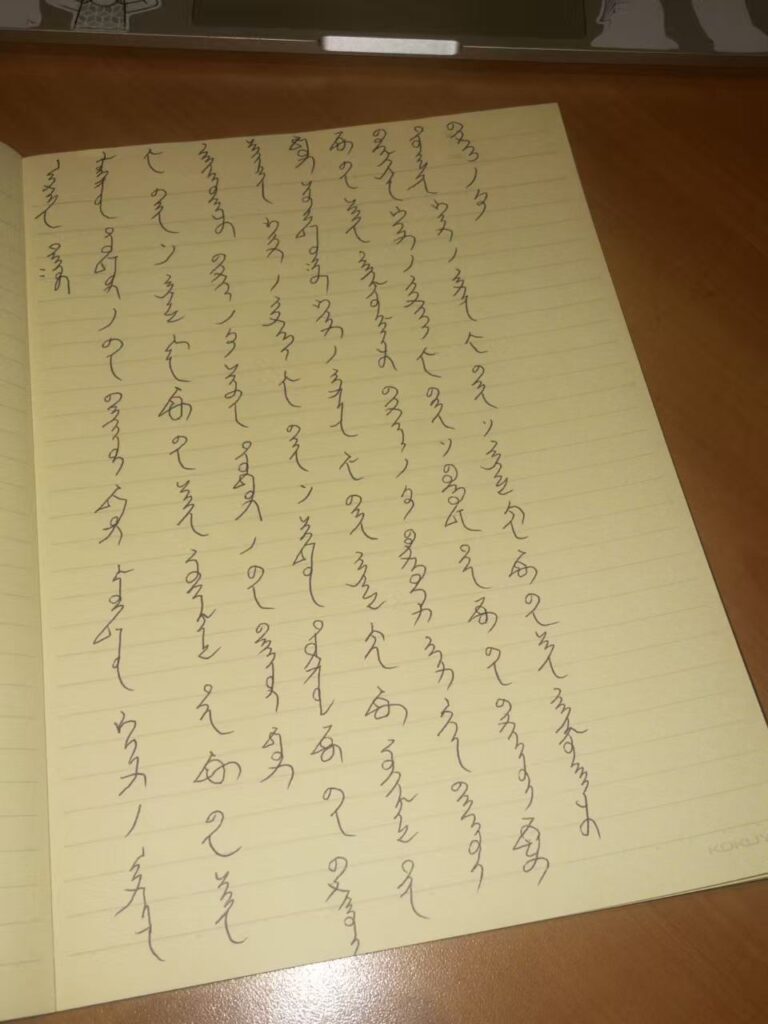
After coming to Wesleyan, Spanish gained even more emotional, communal, and symbolic weight for me. During my freshman year, I went through a long and dark period of political depression as I gradually confronted the reality of China, its autocratic and brutal nature. I felt deeply disappointed in my country and became afraid to speak about politics or current events in either Mandarin or English. I knew there were Chinese people on campus who understood these languages, and I feared being reported.
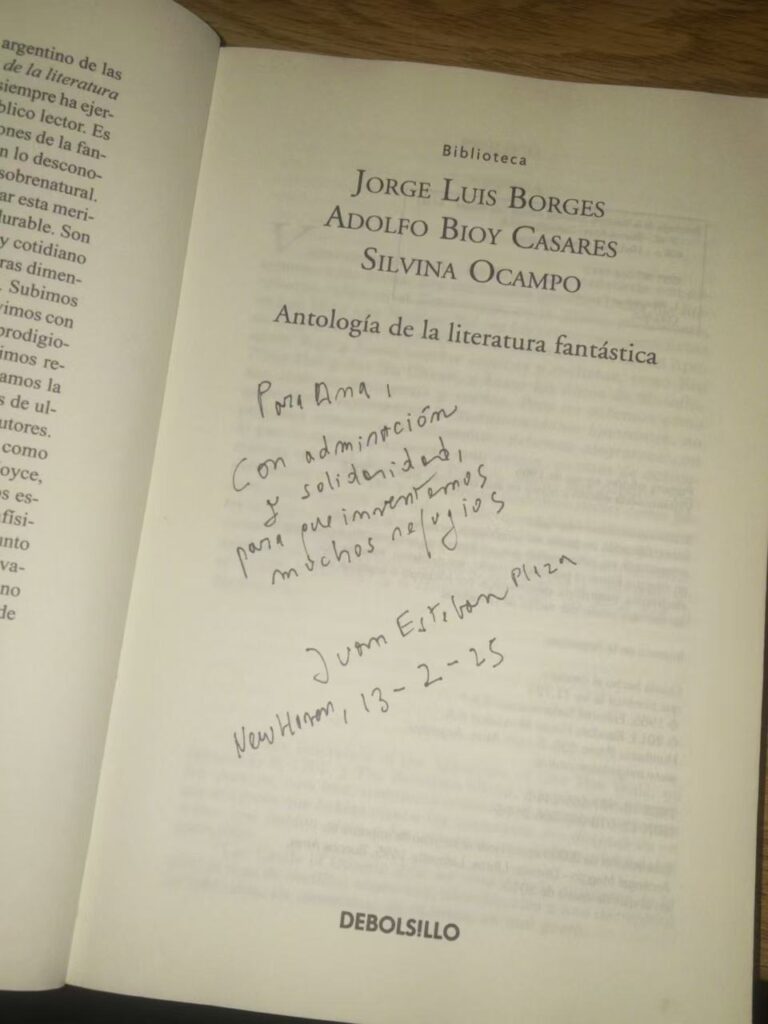
Spanish became my refuge. In class, we learned about Las Madres de Plaza de Mayo, and their resistance under Argentina’s past dictatorship gave me genuine hope. When I finally spoke openly about my feelings toward China—in Spanish—with my professor, Plaza, I felt safe and relieved in a way I hadn’t before. Before he left Wesleyan, he gave me a book of surrealist Latin American literature, with a note inside that read:
“Para que imaginemos, muchos refugios.”
Leave a Reply