Anaventure

 Come start the“Annaventure” with me!

Author: admin

  • Kenya Education Fund: Development, Positionality, and GEM in Action

    Before traveling to Kenya with the first Wesleyan University cohort in collaboration with the Kenya Education Fund, I approached the experience primarily through the lens of my academic interests. As a Government major interested in ethical international development, particularly China’s overseas financing and infrastructure projects, I wanted to understand what development actually looks like on the ground beyond policy papers and political discourse.

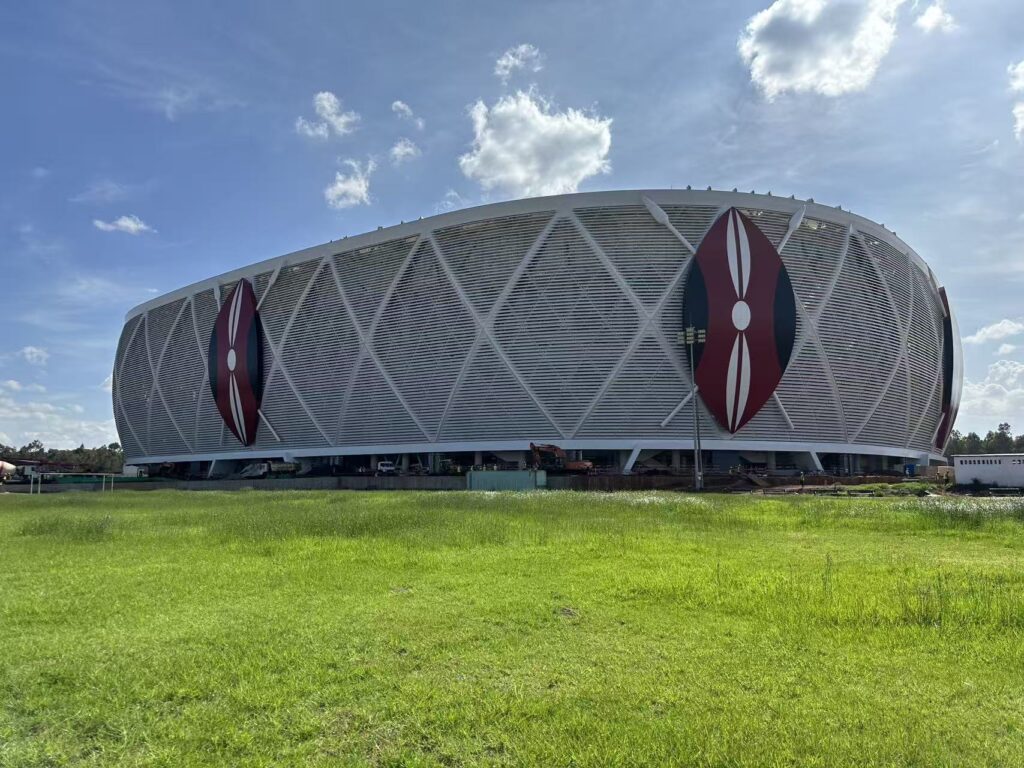
    As part of my independent project, I visited Talanta City Stadium, which is being prepared for 2027 Africa Cup of Nations and co-funded by a Chinese construction company and the Kenyan government. I also visited Chinatown in Nairobi, which felt drastically different from the Chinatowns I had seen in the United States. These experiences pushed me to think more critically about how Chinese presence abroad is perceived, localized, and woven into everyday urban life in Kenya.
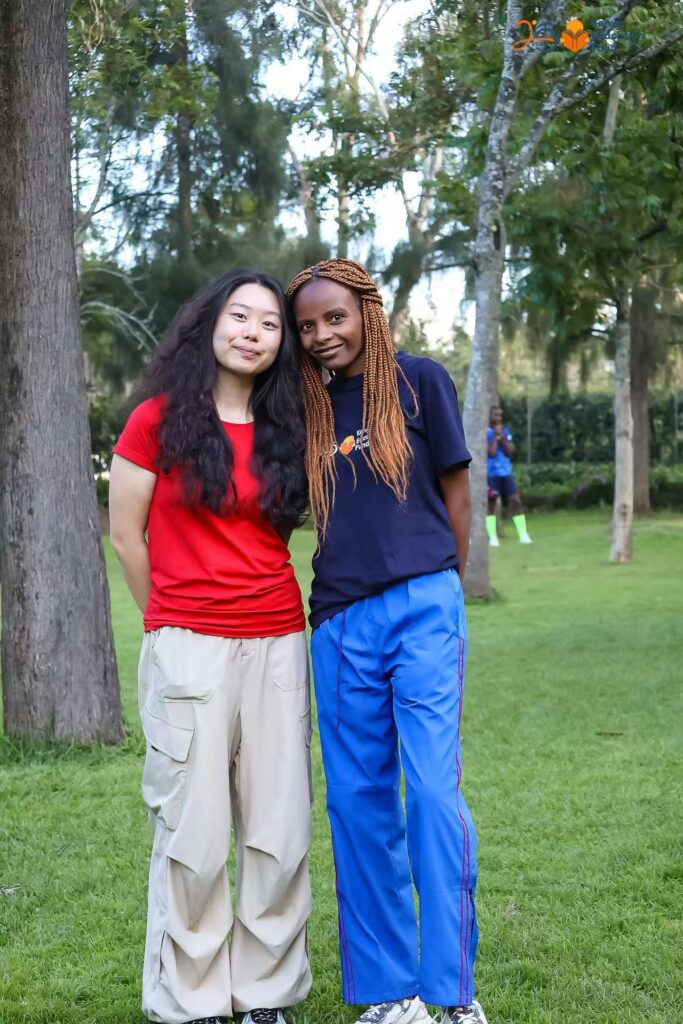
    However, the most meaningful part of the program for me were the relationships and conversations with my mentor and peers at Kenya Education Fund. Through the design thinking workshop organized with KEF students, aach Wesleyan student was paired with a mentor and placed into a small collaborative group tasked with identifying and addressing a social issue. My group focused on transportation, specifically traffic violations and the lack of accountability that often contributes to accidents and congestion.

    At the beginning, many of us were hesitant and shy. We were curious about each other, but also aware of the differences in our backgrounds and lived experiences. Yet the structure of the workshop gradually transformed those dynamics. Because we shared a common goal, collaborated closely, and engaged with one another on relatively equal footing, the interactions became more genuine and comfortable over time. Reflecting on this later, I was reminded of Gordon Allport’s intergroup contact theory, which argues that meaningful intercultural exchange is more likely to occur under conditions of equal status, cooperation, shared goals, and institutional support. What surprised me most was realizing how intentionally this program had created those conditions.

    Our discussions around transportation, some members of my group proposed a public electronic billboard system that would display the license plates of traffic violators, alongside improvements to navigation systems that could warn drivers about accidents and congestion nearby. As someone from China, I immediately recognized similarities to surveillance and public accountability systems I had encountered before. This led to nuanced conversations about how technologies or policies that may function in one country can produce entirely different consequences in another. Rather than arriving at a simple answer, we learned to sit with complexity together.
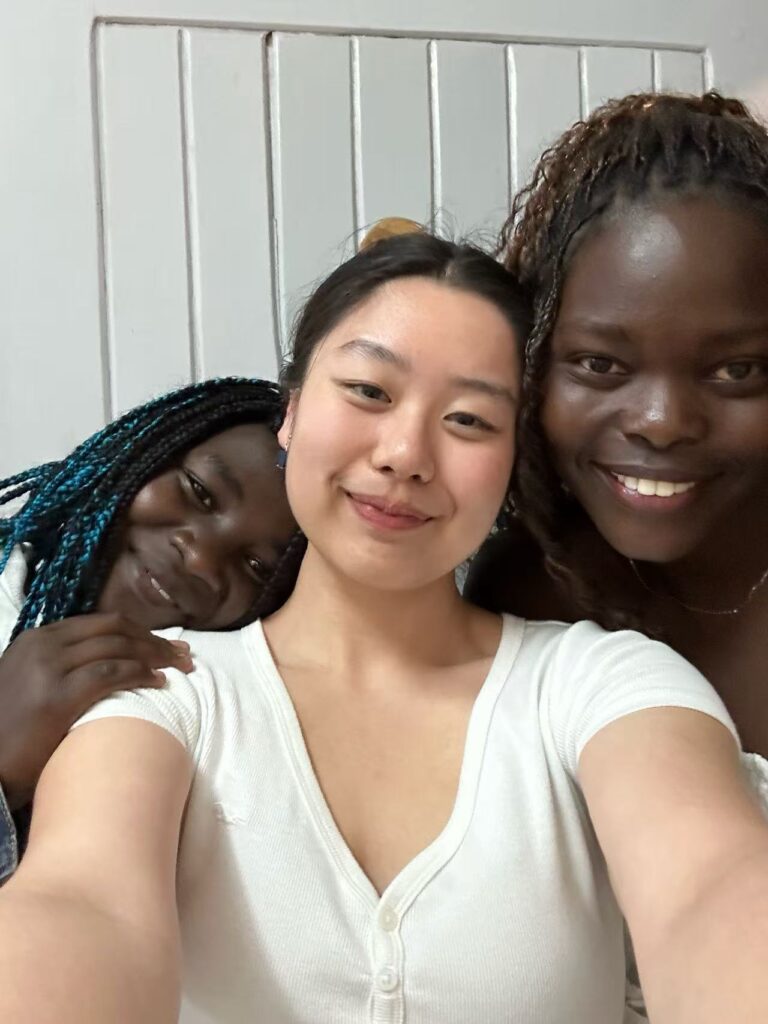
    At the same time, this experience forced me to reflect deeply on my own positionality. As a Chinese student studying at an American university, I occupied a complicated space. Although I am not personally responsible for China’s role in Kenyan development projects, my identity inevitably shaped how others perceived me. At the same time, I arrived through a privileged academic institution with the power to ask questions, frame conversations, and leave whenever I wished, while many of the people around me were living realities that I could only temporarily observe. Throughout the trip, I found myself constantly asking: Who feels comfortable speaking to me? Who remains silent around me, and why?

    Ultimately, what I carry most strongly from Kenya is not a definitive understanding of international development, but a deeper awareness of how intercultural learning depends on humility, mutual vulnerability, and human connection. The experience was meaningful, joyful, uncomfortable, and unsettling all at once. More than anything, it reminded me that ethical engagement across cultures requires not only curiosity, but also a willingness to confront the unequal structures and assumptions we bring with us into every interaction.
  • Standing with Cantonese as a Mainlander

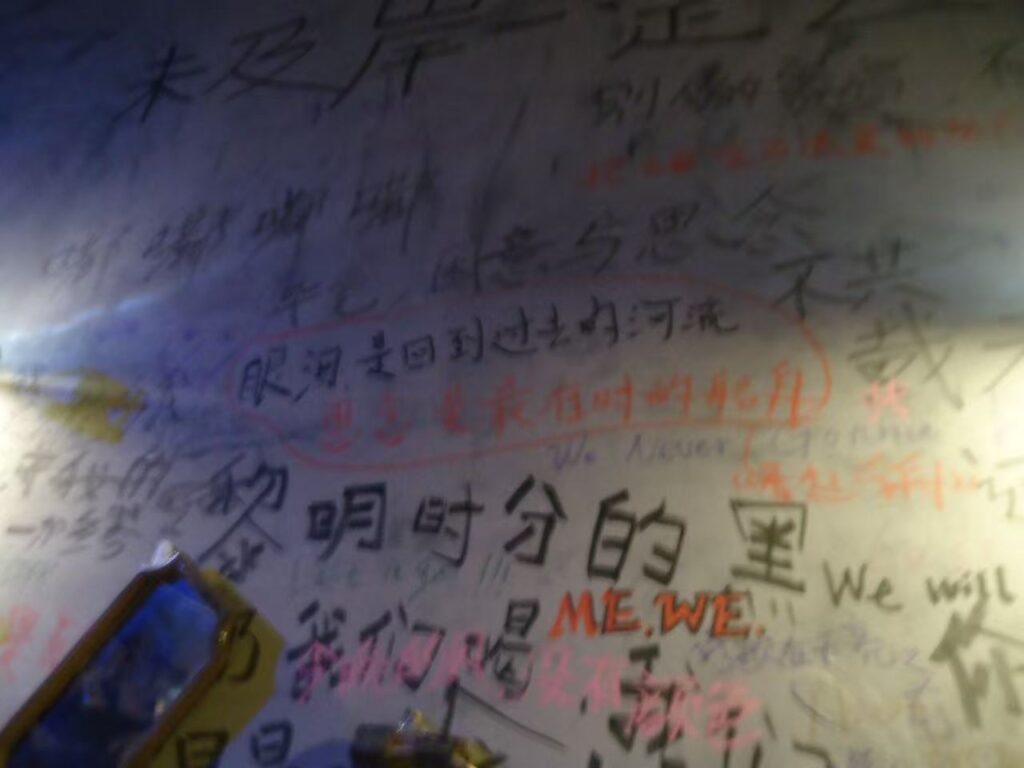
    I have long struggled with my beloved and hated Chinese identity. I often say, “我恨东亚恨入骨血,我爱东亚又如心脏”—I hate East Asia with every fiber of my being, yet I love it as dearly as my own heart. Living within Chinese society for so long has left me with a deeply internalized sense of self-condemnation that surfaces in almost every intercultural experience I have.

    When I spend too much time within my own identity community, a voice inside me whispers: Then why study abroad? You’re not even engaging with local people—shame on you. Yet when I engage deeply with the local community and am seen doing so by people from my own, another anxiety takes over: Will they think I’m whitewashed? Will they think I’m selectively abandoning my identity? No matter which direction I turn, something always feels misaligned, as if I am failing an unspoken test.

    This semester, however, I have begun to feel a sense of relief. I found myself standing with my community in a different way—not through retreat or assimilation, but through responsibility. I founded the Cantonese table and helped establish the first credit-bearing Cantonese class. In doing so, I listened closely to my community, acknowledged the collective identity we share, and recognized the struggles that bind us together. More importantly, I chose to act.

    These actions did not pull me away from the local community; instead, they allowed me to present my own community to it—openly and proudly. I am no longer torn between belonging and engagement. I have learned that standing with my community does not mean closing myself off from others, and engaging across cultures does not require erasing where I come from. In this space of action, I have found a way to hold my contradictions without shame. My identity no longer feels like something I must justify; it has become something I can inhabit with intention and care.

  • Between the Languages That Made Me

    I have always considered myself a linguistic refugee. I don’t know whether this is an established term or something I invented for myself, but I grew up moving between worlds through language—escaping, surviving, and imagining in between.

    English has been my favorite subject since primary school, which was never something my teachers or family were happy to see. Math, physics, and chemistry were the subjects I “should” be loving. “Should” is a verb that runs in the blood of the language of Mandarin. It is rarely about what I “can” do, but always about what I “should” do. I should not read books outside my textbooks. I should not move an inch during the mandatory lunch nap. I should prioritize math and physics. I should be skinny. I should get perfect scores.

    This is exactly why I loved learning English. The stories told in that language were about what I “can” do, what I can create. During mandatory evening study sessions in junior high, while others were cramming for exams, finishing homework, and doing what they “should” do, I was writing my diary in English.

    Eventually, I arrived at a place where I thought I could finally be myself. I attended an international high school in Shanghai, taking classes in English and speaking with teachers in English every day. At first, it felt wonderful. Everyone sounded positive, encouraging, and empowered. But gradually, small cracks began to appear in my identity. I felt caught between the verb should, which had shaped me since childhood, and the empowerment embedded in English, which felt almost too good to be true to a younger version of myself.

    This tension became especially clear when I returned to Wuhan and visited my junior high teachers. They reacted strangely to the way I spoke—thanking people frequently, making small talk, using an overtly positive tone. One of my junior high math teachers once told me, “Don’t say thank you when you don’t mean it. Don’t embody this Western way of fake niceness. This is not America.”

    As I spent more time immersed in English, I began to sense the language’s core logic more clearly. English is indeed positive and empowering, but it can also feel self-exploitative. I constantly tell myself, You can do this. You are enough. You are amazing. Unlike Mandarin, which often imposes discipline and pressure from the outside, English internalizes it. The demand to improve does not disappear—it turns inward…… I began to discipline and exploit myself, pushing myself endlessly to become better, more fulfilled, more authentic. The language constructs an illusion of freedom and coherence, a sense of autonomy that feels liberating on the surface, yet quietly conceals another form of power beneath it.
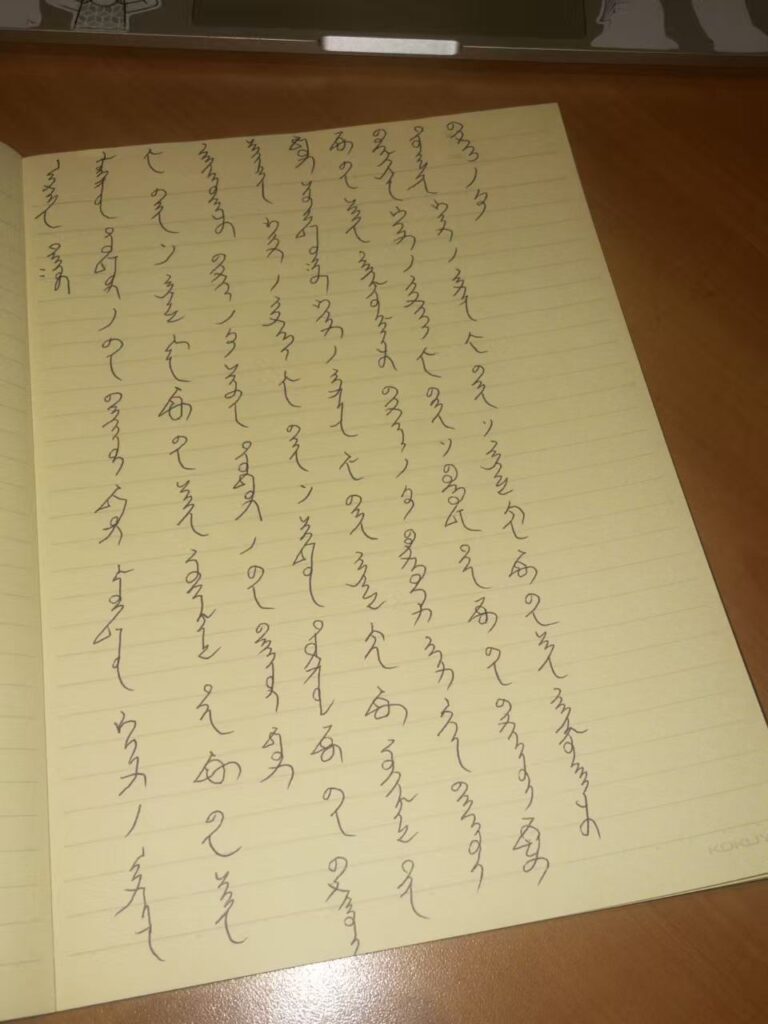
    While I was struggling through high school, caught in confusion about my identity between English and Mandarin, my third language arrived. Spanish—a language that still feels resistant, communal, energetic, and largely free of anxiety to me.

    In my final year of high school, I took Spanish with my physics teacher, who is from Spain. I was terrible at physics, and he knew it. Whenever I panicked, he would simply say, “Bah, una tontería.” To him, nothing ever seemed more important than his siesta or enjoying Shanghai’s weather. Learning Spanish and speaking it made me feel as though the universe had only ever wanted me to be an animal; just existing is fine. It never demanded that I be anything human-defined as “amazing.”

    After coming to Wesleyan, Spanish gained even more emotional, communal, and symbolic weight for me. During my freshman year, I went through a long and dark period of political depression as I gradually confronted the reality of China, its autocratic and brutal nature. I felt deeply disappointed in my country and became afraid to speak about politics or current events in either Mandarin or English. I knew there were Chinese people on campus who understood these languages, and I feared being reported.

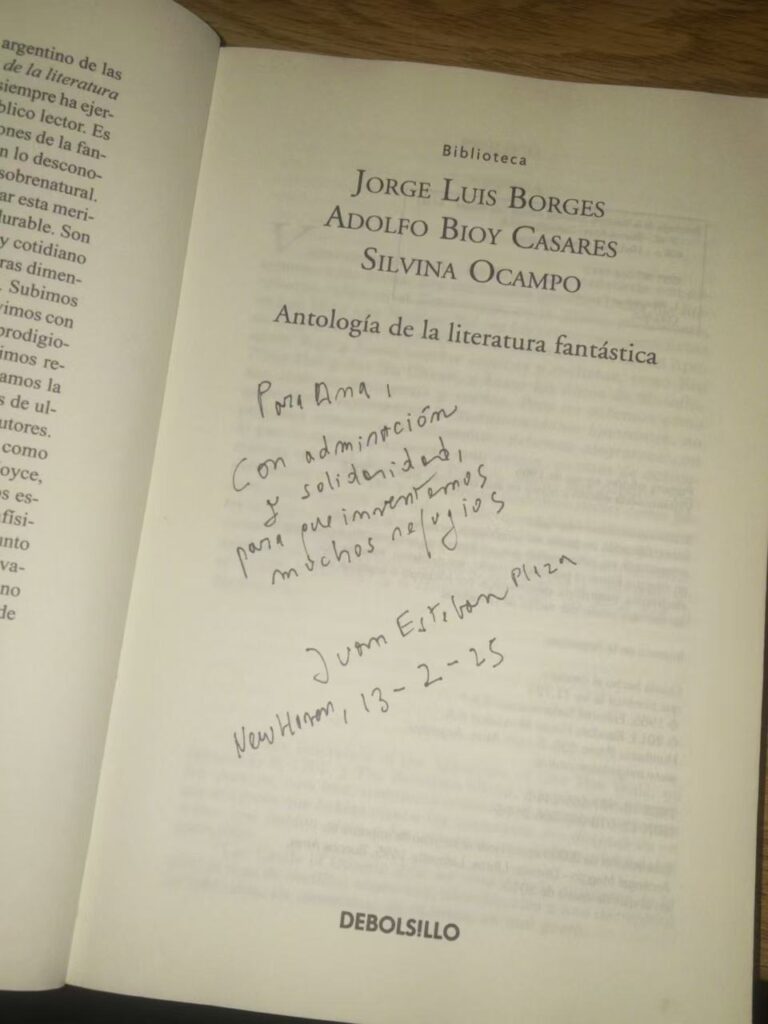
    Spanish became my refuge. In class, we learned about Las Madres de Plaza de Mayo, and their resistance under Argentina’s past dictatorship gave me genuine hope. When I finally spoke openly about my feelings toward China—in Spanish—with my professor, Plaza, I felt safe and relieved in a way I hadn’t before. Before he left Wesleyan, he gave me a book of surrealist Latin American literature, with a note inside that read:

    “Para que imaginemos, muchos refugios.”

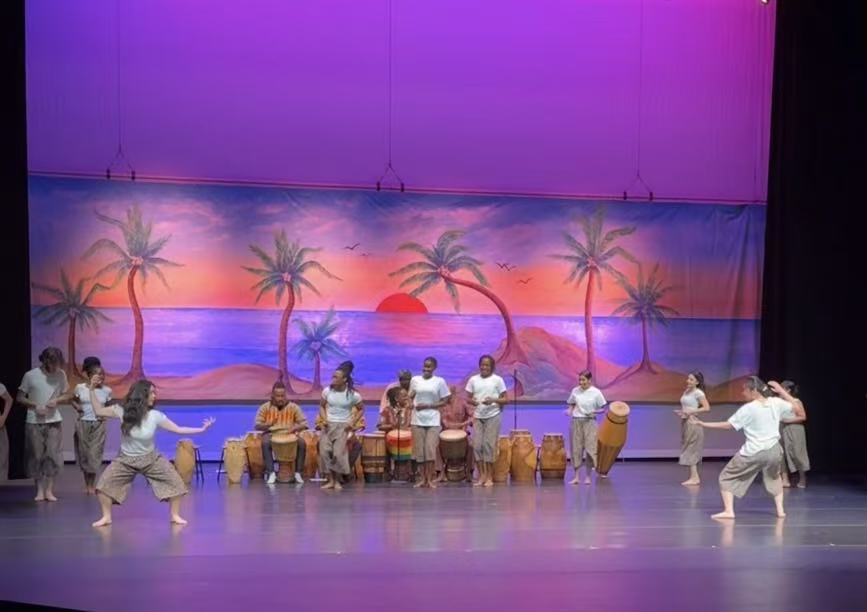
  • West African Dance: Community, Body, and Dancing Beyond Mirrors

    “In this class, we’re not working toward perfection. Everyone’s body has its own way of doing the movements, and we’re all beautiful when we’re embodying the joy of our ancestors,” Prof. Iddrisu Saaka said to us. Hearing this shook me to the deepest gut of mine.

    Taking West African dance was the first time I learned that dance can be something experienced as a community, rather than something placed on a pedestal and only to be admired from a distance. It showed me that in that culture, dance is for everyone, regardless of body type.

    In my country, dance is rarely taught or understood as something that can be performed by someone who weighs more than 50 kilograms or who has not received formal training. It is not for everyone. And I’m never considered one of those “qualified” to dance. Dance belongs on a stage: the audience’s role is to admire, and the dancers’ role is to perform. This class was my first exposure to a form of dance that is deeply historical, cultural, and communally grounded.

    At the beginning, I was very nervous about not copying the movements perfectly or not catching the rhythm exactly and especially doing dance without a mirror. But very quickly, this choice revealed something important about myself. When I dance in front of a mirror, I judge myself constantly—my posture, my lines, whether I am “doing it right”—and that constant self-evaluation pulls me away from feeling the spirit and embodiment of dance.

    Learning without a mirror forced me to pay attention to the communal spirit and context behind each movement in the live music, in moving alongside my peers, in the movements, and in being present in my own body. It also made me realize that most communal dances weren’t created with the mirror or with the purpose of being staged… It’s a nature conversation between the people, the music, the land, the history, the body, the mind, and everything around.